
User Research
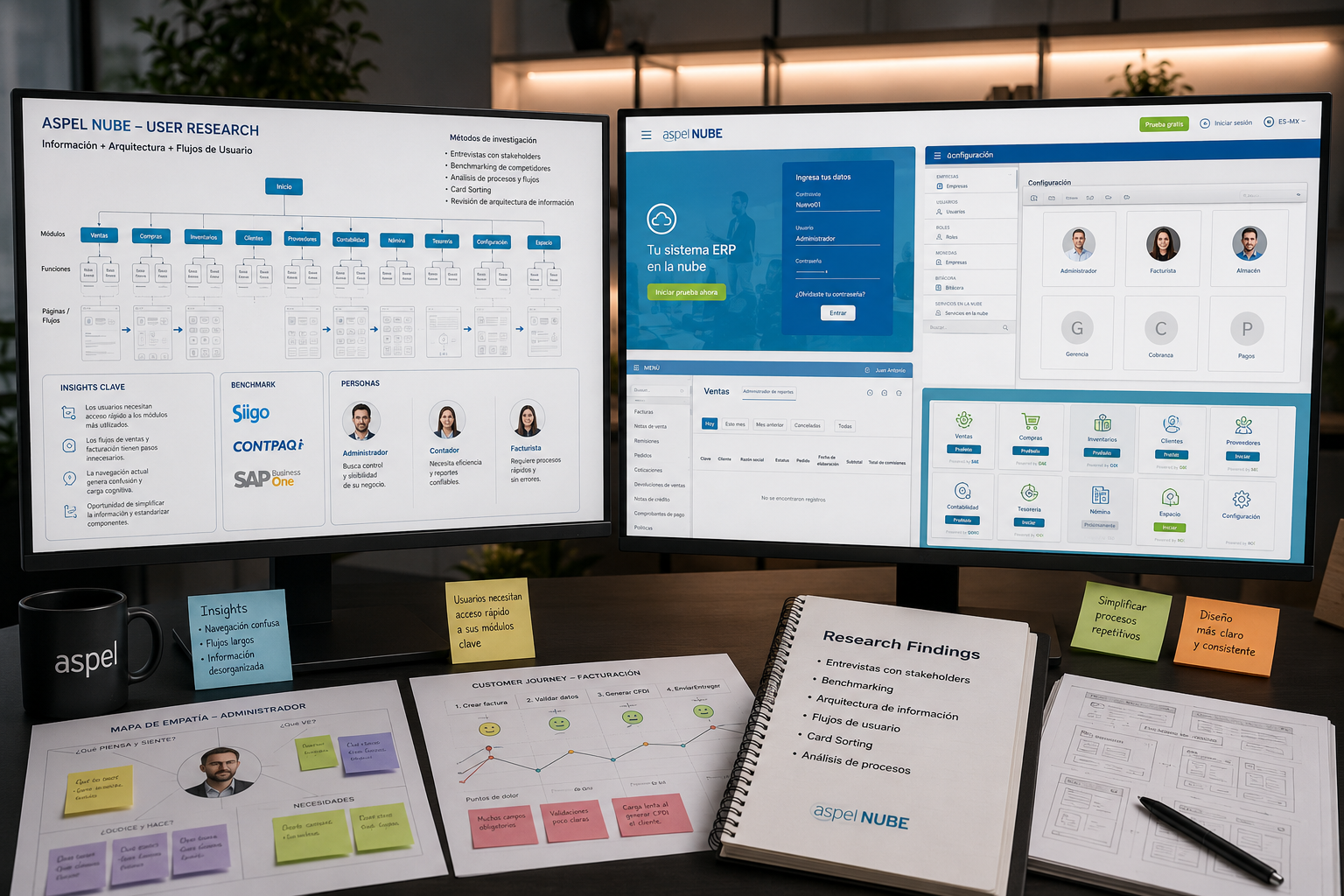
To support the redesign of aspel.com and the cloud-based ERP platform, user research was conducted through stakeholder interviews, benchmarking, and workflow analysis. Research findings helped identify usability issues, optimize the information architecture, and align product decisions with both business goals and user needs.
Research Methods:
- Stakeholder Interviews
- Competitive Benchmarking
- Workflow Analysis
- Information Architecture Review
Key Outcomes
- Improved content organization and navigation.
- Identified usability pain points across ERP workflows.
- Established a research-driven foundation for the new Design
System.
User Stories
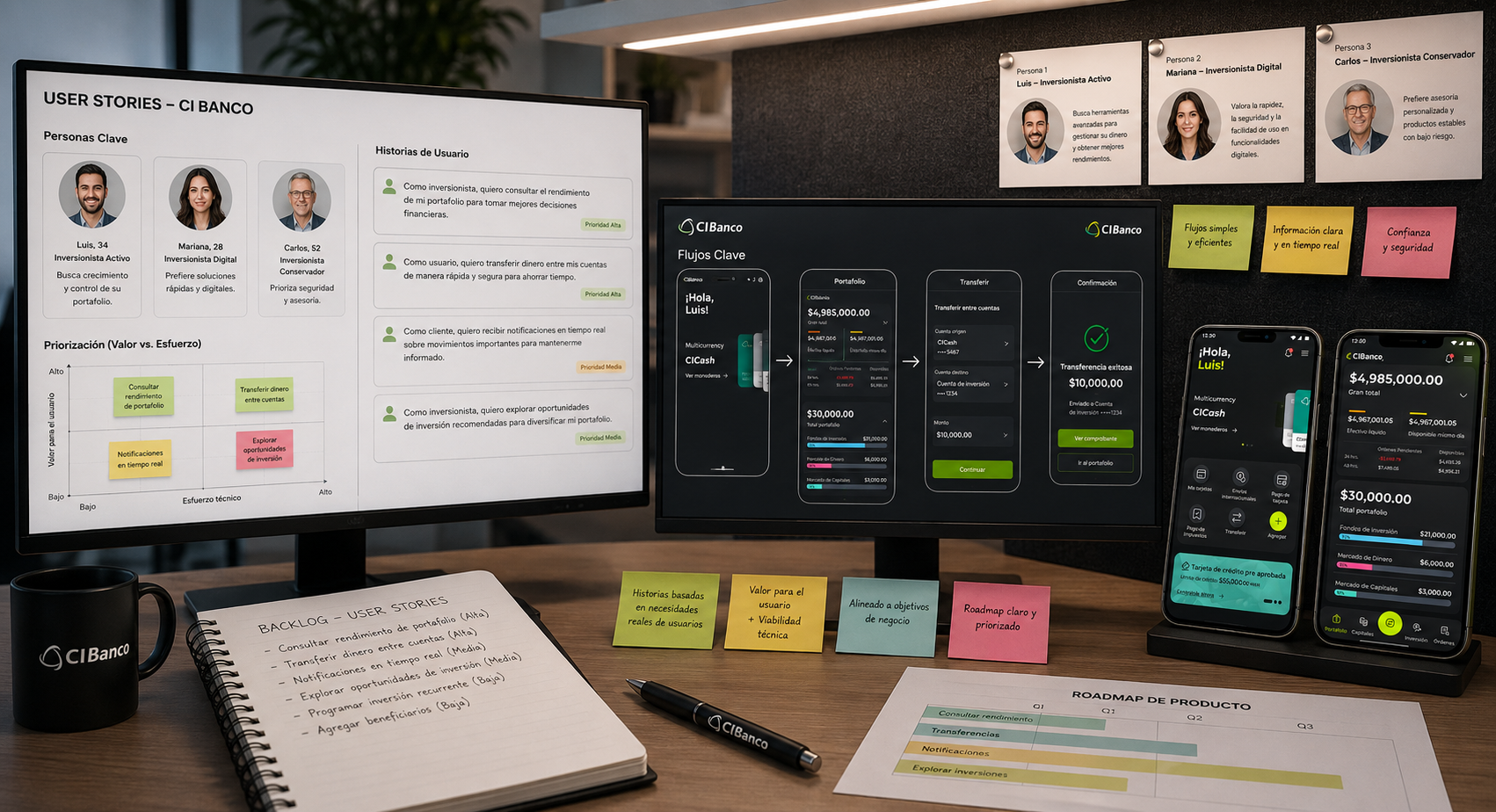
For the redesign of the Ci TrdR mobile application, research findings were translated into detailed personas representing different investment user profiles. These personas guided the creation of user stories using the Agile framework:"
As an investor, I want to monitor my portfolio performance so that I can make informed financial decisions.
User stories became the foundation for prioritizing features across modules such as Stock Market, Capital Markets, and Money Markets.
Prioritization & Planning
Collaborated with Product Managers, developers, and business stakeholders to prioritize user stories based on customer value, technical feasibility, and business objectives. This process defined a clear product roadmap and ensured every design decision supported both user and business needs.
Improvements
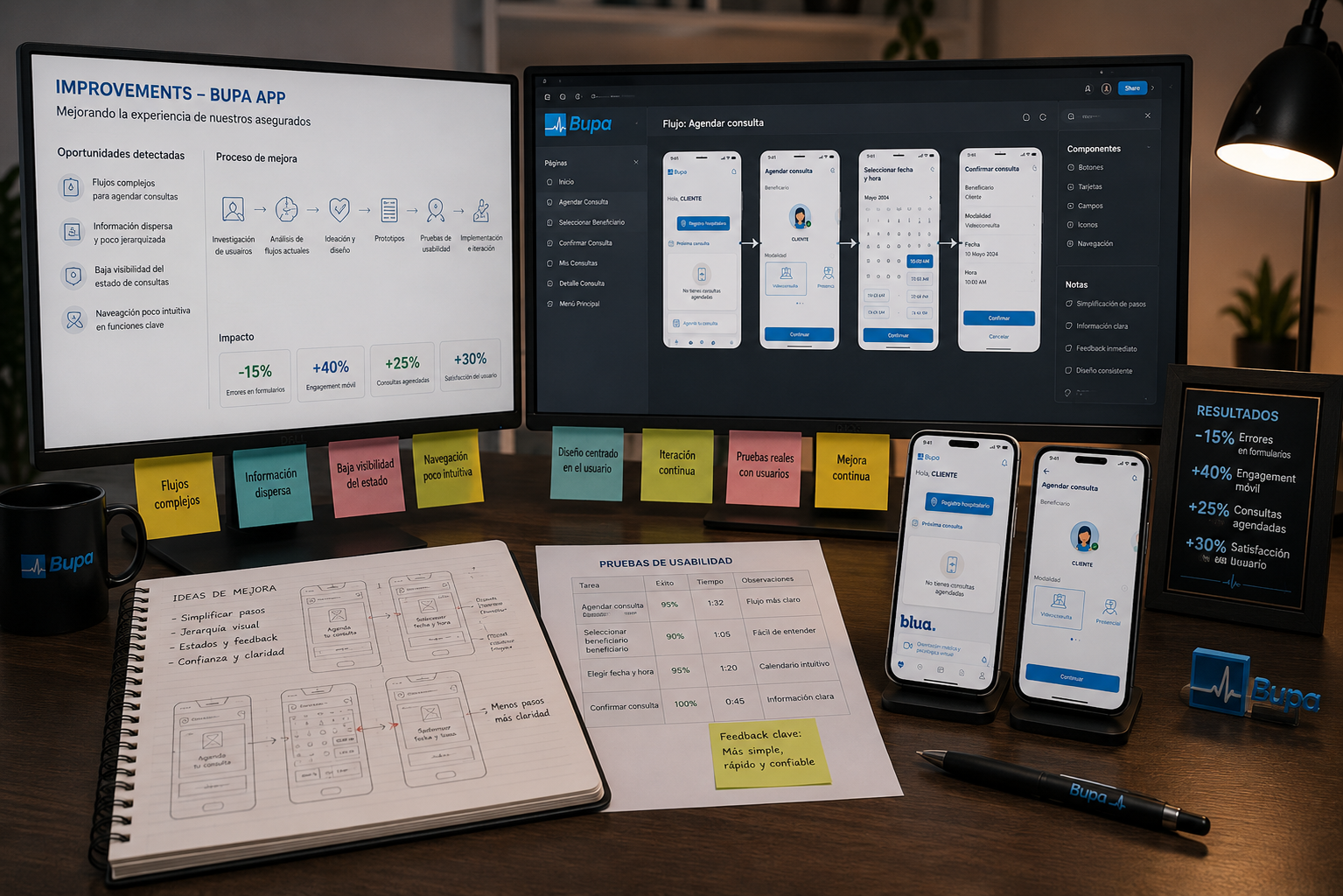
The Bupa mobile application was continuously refined through usability testing, functional analysis, and iterative design improvements. Critical healthcare journeys—including telemedicine, health monitoring, and genetic analysis—were optimized to reduce friction and improve the overall policyholder experience.
Wireframing & Prototyping
Designed low- and high-fidelity prototypes using a scalable Design System, enabling rapid validation and seamless collaboration with front-end developers.
Usability Testing & Iteration
Moderated usability sessions helped identify interaction issues, validate new features, and refine critical user flows before implementation.
Impact & Results
- Simplified healthcare journeys by reducing unnecessary user steps.
- Improved accessibility and usability across mobile experiences.
- Increased consistency through reusable Design System components.
- Accelerated collaboration between design and
development teams.